
Poultry Lighting
-
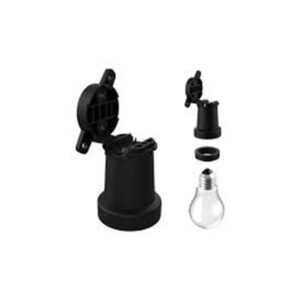
Poultry Lighting Pin Socket
Sistemtav Needle Socket offers flexible use in poultry house lighting systems thanks to its compact structure and practical installation feature. With body dimensions of 40 × 55 × 41.5 mm and a weight of 50 grams, the product can be easily mounted at any desired point along the line.
Thanks to its needle connection structure, lamp spacing can be adjusted according to user requirements, ensuring homogeneous and balanced lighting inside the poultry house. Its durable structure provides long-lasting and reliable operation.
Explore -
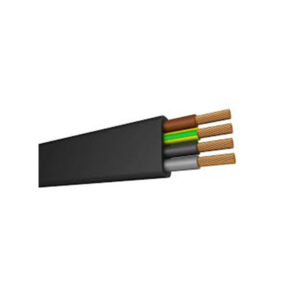
Poultry Lighting Flat Electric Cable
– Manufactured using fully copper material, providing high quality and durability.
– Thanks to its flat cable design, it can be easily installed and offers flexible use.Explore -
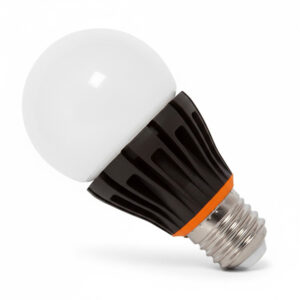
Poultry House Lighting Systems
Providing up to 53% energy savings compared to fluorescent lamps, the LED lighting system offers wide and homogeneous light distribution thanks to its special oval design. With an average lifespan of 25,000 hours, it delivers a long-lasting and efficient lighting solution. Its 3000K daylight color temperature creates a natural and balanced lighting environment inside the poultry house.
Thanks to its specially designed socket structure, the system allows easy installation at desired intervals. Its plastic body and advanced LED cooling technology ensure operation without overheating. By providing vibration-free and uniform lighting inside the poultry house, it improves animal comfort. The protective glass structure offers resistance against water and dust.
Equipped with a flat and plastic-protected electrical cable, the LED lamp provides safe and practical installation. Thanks to its electronic dimmer support, the light intensity can be adjusted between 0% and 100%. A single dimmer can control up to 140 LED lamps, making it an ideal solution for large-scale areas.
Explore
Lighting systems are among the most critical components directly affecting the efficiency of modern poultry houses, production facilities, and livestock operations. A properly designed lighting infrastructure improves both animal welfare and production performance. Especially in the poultry industry, poultry house lighting systems regulate animal behavior by controlling light intensity, duration, and wavelength. When the photoperiod schedule is properly managed, feed consumption, egg production, and growth rates can be balanced efficiently. In addition, energy-efficient LED lighting solutions have become one of the most preferred technologies in recent years. LED fixtures consume less power, offer a long service life, and can operate for years with minimal maintenance requirements.
In animal housing facilities, selecting the correct light temperature and brightness level is extremely important. Advanced poultry house lighting systems allow lighting levels to be automatically adjusted according to daily light cycles. This helps reduce stress levels in animals, stabilize movement patterns, and improve overall health conditions. Dim lighting periods positively influence feeding habits, while brighter lighting periods increase activity levels. All these cycles can be managed more precisely through the dimming capabilities offered by LED technology. Furthermore, lighting systems eliminate dark areas within poultry houses, enabling animals to perceive their environment more evenly and comfortably.
Energy efficiency is a major consideration for livestock operations. In this regard, LED lighting offers significant advantages compared to traditional fluorescent lamps. LEDs provide the same light intensity with lower wattage consumption, helping reduce electricity costs. Additionally, LED fixtures are highly resistant to impacts and moisture, making them ideal for long-term use in poultry house environments. Enclosed LED structures designed to operate in dusty and humid conditions reduce both maintenance and replacement costs. With automatic scheduling modules used in modern facilities, lighting systems can be fully programmed. Sunrise and sunset simulations can also be created to support the natural biological rhythm of the animals.
Lighting influences not only production performance but also hygiene and operational safety. Bright and balanced light distribution improves employee visibility and mobility inside the poultry house, allows equipment to be seen more clearly, and increases the effectiveness of cleaning procedures. In addition, poultry house lighting systems enable surveillance cameras to capture much clearer images, providing advantages for both security and behavioral monitoring. The flicker-free illumination produced by LED systems helps reduce eye strain and behavioral disorders in animals.
Modern control panels used in lighting systems allow lighting scenarios to be adjusted quickly and efficiently. Since different light intensities are required during various growth stages, these control systems provide flexible management capabilities. Some advanced control units can detect natural daylight levels and automatically balance indoor lighting intensity, preventing unnecessary energy consumption. Moreover, the wide range of color temperature options available with LED technology makes it easier to create environments tailored to animal behavior and welfare.
Specialized poultry house lighting systems developed for poultry farming operations offer practical installation processes through hanging brackets and modular connection structures. Fixtures can easily be added or removed, allowing lighting lines to expand as the facility grows. Specially designed diffusers ensure homogeneous light distribution throughout the poultry house, preventing the formation of dark zones. Durable fixture bodies also provide resistance against ammonia and other chemical gases commonly found in livestock environments.
As a result, lighting systems are not merely a source of illumination but a strategic investment that directly impacts production quality. Through energy-saving LED lighting solutions, advanced control panels, photoperiod management, and durable fixtures, modern farms achieve efficient and sustainable lighting infrastructures. These systems, which play a critical role throughout every stage of poultry production, support animal health while directly contributing to operational efficiency and farm profitability.