
Poultry Ventilation Control
-
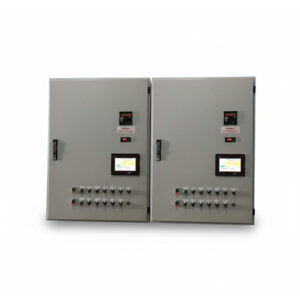
Poultry Control Computer 12
The Sistemtav Poultry House Ventilation Control Panel and Computer offers users easy and advanced control through its 12” widescreen touchscreen display. The system precisely measures and manages poultry house environmental conditions through 6+1 indoor temperature sensors, 1 outdoor temperature sensor, attic sensor, CO₂ (carbon dioxide) sensor, humidity sensor, air quality sensor, and pressure sensors. The cooling system operates in integration with pad and pad cover control as well as the automatic air inlet control system (pressure and time-based). Detailed reporting can be achieved through the water consumption measurement and recording system, while the system supports control of up to 21 fans (optionally up to 24 fans). Heating can be managed regionally or according to sensor averages, while optimum and smooth-transition ventilation control keeps animal comfort at the highest level. Offering flexible production management with seasonal and 45-day package program options, the system also provides full automation through additional functions such as lighting, feeder control, silo feed weighing, and chick weighing control. Thanks to its remote access capability, the system can be monitored and managed over the internet, while advanced reporting, graphing, and archiving features ensure that historical data is securely recorded and stored.
Explore -
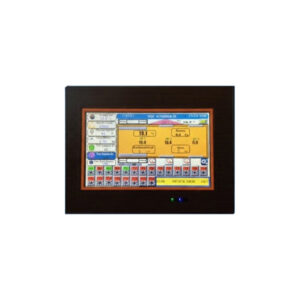
Poultry Control Computer
Featuring a 12” widescreen touchscreen display, the system provides users with an advanced control and monitoring experience. It analyzes poultry house environmental conditions in detail through 6 indoor temperature sensors, 1 outdoor temperature sensor, 1 attic sensor, CO₂ (carbon dioxide), humidity, and air quality sensors. Water consumption can be monitored through pad and pad cover control, as well as the water meter and recording system, while the system supports control of up to 24 fans. Thanks to its remote access capability, the system can be monitored and managed via the internet. Heating can be controlled regionally or based on sensor averages, while air inlets can operate with timed and pressure-controlled functions. Optimum and smooth-transition ventilation control enhances animal comfort. Flexible production management is achieved through a 45-day package program and selectable transition features. With lamp and feeder control, advanced reporting and graphic displays, silo weighing, and chick weighing functions, the system offers an integrated and professional poultry house automation solution.
Explore -
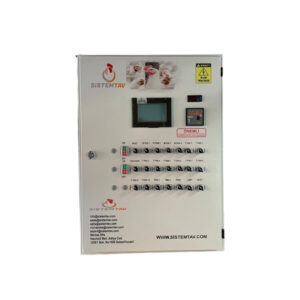
Poultry Control Computer 7
The system effectively manages indoor climate control through ventilation fan and pump motor control. Thanks to the radiant heater control output, it operates in integration with heating systems. Indoor and outdoor temperature sensors together with the humidity sensor continuously monitor environmental conditions, while the pressure switch supports system safety. Through alarm contacts and outputs, the system provides instant warnings in critical situations such as motor failure, high temperature, low temperature, phase loss, and low mains voltage. Remote notifications can be provided via SMS connection, and the PC communication feature allows easy system monitoring and management.
Explore
Ventilation control systems form the foundation of climate management infrastructure in modern farms and industrial livestock facilities. Especially in enclosed environments, the continuous monitoring and automatic control of parameters such as temperature, humidity, and air quality directly affect both animal health and production efficiency. With an automatic ventilation control panel, the operation of all ventilation equipment is optimized in real time according to environmental conditions. These systems provide energy efficiency and stable climate conditions while minimizing human error.
In advanced industrial ventilation control systems, critical environmental data such as temperature, humidity, carbon dioxide, and ammonia levels are continuously monitored through sensors. The data collected from these sensors is analyzed by a digital ventilation control unit, enabling fans, window actuators, and cooling systems to automatically activate or deactivate as required. This prevents harmful gas accumulation, overheating, and excessive humidity that could threaten animal health. Particularly in high-capacity production facilities, these automation solutions have become essential for maintaining productivity and ensuring animal welfare.
Farm climate control systems can also operate in full integration with heating and cooling infrastructures. Through digital control panels, environmental conditions can be programmed in detail, and customized climate scenarios can be created for different age groups or production sections. As a result, heating systems can automatically operate during cold winter conditions, while ventilation fans and pad cooling systems activate according to summer climate requirements.
Modern ventilation control systems also provide remote monitoring and intervention capabilities. Through internet-based platforms or mobile applications, farm managers can instantly monitor environmental data within the facility and manually intervene when necessary. Automation software also records historical climate data, enabling detailed performance analysis and reporting. This allows energy consumption to be optimized while simplifying maintenance planning and operational management.
From a safety perspective, integrated alarm and warning systems provide immediate notifications in the event of equipment malfunctions or environmental deviations. Through the automatic ventilation control panel, unexpected situations can be addressed quickly and effectively. Especially in cattle and poultry farming operations, maintaining stable and healthy environmental conditions is critically important for herd welfare and production consistency.
As a result, technologies such as ventilation control systems, industrial ventilation control, digital ventilation control units, automatic ventilation control panels, and farm climate control systems represent the foundation of sustainable, efficient, and safe livestock production. With proper engineering and regular maintenance, it is possible to establish a long-lasting, reliable, and fault-free climate management infrastructure.